Monday, August 6, 2012

Music Educators - Seize the Day!


What an exciting time!  This morning I checked my office and teaching schedule, twitter, and a few news feeds from my Samsung Galaxy phone before my feet even hit the floor.  I am connected to and sharing information with students, teachers, and colleagues for hours each day. Never before have we had this much information and unprecedented connectivity available at our fingertips.


People of all ages are accessing data on the go; it's ready whenever and wherever they choose and younger generations not only expect but assume that the information they need and want will be available digitally.  So, will music educators take note? (groan...) or will the profession continue to rely on outdated methods and models simply because it has 'worked in the past?'  Technology in and of itself will not make a teacher 'better', but denying current trends may prove very costly to the profession.


A NY Times story from January, 2012 reports 'For the first time in history, digital music sales topped the physical sale of music'. This trend they say, will surely creep into other areas of the music business - no doubt making traditional print music publishers and record labels a bit uneasy. And how long before music educators feel the heat if they haven't all ready?  Mike More of Headliner.fm says,


"I think you have a whole generation who doesn't care if they own anything. Accessibility has become paramount. This is what consumers want -- they want it everywhere and on all their devices."


Music learners (and by that I mean ALL music makers, not only El-Hi 12 to 18 year-olds, but enthusiasts and 'consumers' of all ages) are turning to digital outlets for their information and guidance. Interest in traditional print method books and current teaching models is waning as savvy students and teachers alike are finding that there's 'more than one way to skin a cat'. The challenge for our profession is to embrace new trends and at the same time produce quality materials, products, and services and deliver them in ways that meet the growing demands and expectations of current and future learners.


Brian Chesky of airbnb was recently featured on Nightline in a segment called New American Dream: Rent Not Own.  The show addressed the growing trend toward renting vs.owning in categories from cars to houses, furniture, golf clubs, baby clothes, and more.  But his quote "Access is more powerful than ownership, and more economically sustainable" really hit home with us.


As you might imagine, at DLP we choose to see these trends as a great opportunity.  It's a chance for us and fellow music educators to reach new markets, to create more music makers, and in the end, a stronger profession over-all.  So, let's seize the day, embrace change, and be open to new ideas and avenues for music teaching and learning. Our future and the future of music education may very well depend on it!


Editor's Note: This blog posted last week on the dlp website and since then we've gotten feedback from music educators the world over. The first was Heath Vercher who said:


As a music educator (and by proxy someone interested in the future of music education) I'd be very interested in reading and hearing more discourse on what the future could hold for music teachers, and how we can "seize the

day."


I see a lot of posts here on the DSM site and the DLP blog encouraging music educators to think outside, become more entrepreneurial, and embrace the use of technology and the advantages of the online world.
Now, granted I haven't had the time to read your entire archive of blog posts (though I am a regular reader) but I'd like to read about more concrete ideas about how it might be possible for music educators to "seize the day:"


Or, if you have more blog posts on these topics, point me to them! 


- Heath


Here is our reply:

Heath - first of all thank you very much for being a reader and for taking the time to comment - much appreciated! We certainly don't have all the answers, but we have been thinking for more than 20 years about the very concept of 'what is a profession' and does teaching music (as it is currently perceived) even qualify. In fact, Dr. Bob Lawrence did his doctoral thesis on this very subject. I'd be happy to share some of his findings with you sometime.

We choose our words carefully as this is a delicate subject for many - but since you asked, here are just a few thoughts that puzzle my colleagues and I and maybe a few ideas about how we can 'seize the day'. 

Music education exists almost entirely within academia. Our training of future teachers is almost 100% geared toward working with El-Hi aged folks (band, choir, orchestra students). Yet, study after study shows how music is great for the brain, its elasticity and memory, etc., how it can help the aging process and even trigger incredible results in Alzheimer patients. And what do we do with this data? We use it to try and 'save music in schools' by asking for donations so that music programs can make kids better at math. I know that's an over-simplification, but I imagine an outsider might have that perception and that's not good. 

The actual number of people interested in music, playing learning writing etc is astounding - just look at the numbers from the NAMM (National Association of Music Merchants) shows, there is alot interest and $ spent on music and music related products. In fact, it may be at unprecedented highs, even in this economy.

So how about we fend for ourselves and CREATE music teaching firms outside of academia? What if some of us move outside of classrooms and set up professional shops within our communities to reach the HUGE market of people interested in music? People who by the way, have the ability to pay for our professional services.

To do this we'll need to include business classes as part of our training and teach college-aged kids that music teaching can be a successful and profitable venture (as well as a noble endeavor). PS -I welcome you to visit DSM for a day and see 4 year olds coming for lessons alongside 80 yr olds - it's a beautiful thing! I believe we can save music education from within if we open up to these ideas. I am not afraid this direction might take away from school programs, instead I feel it will strengthen them by getting more people involved and making a healthier profession over-all.

2. Embrace technology - the internet and web devices are perfect for information sharing and delivery. What is music teaching really? It's imparting our passion for music on to new folks and explaining the steps needed to move through a process to reach a goal. Current and future generations will not accept the current method book norm (as good or bad as some may be). We need music educators to accept and embrace technology not for technology's sake, but to assure that we remain relevant!

One of the main reasons we have been tinkering with DLP for almost 12 years is we realized more and more of our students had come to expect that this kind of program 'must exist somewhere'? But when we pitched it to 3 of the largest print music publishers in the world, they all passed...(lucky for us in hindsight). 

3. (some short ones) Do not be pigeon-holed by the instrument you play.

3a. Remember that it's not about the music, it's about people.

3b. Make the process memorable for every learner.

3c. And, ....continue to be passionate about teaching (I know you will) or don't teach at all.

Speaking of, here comes an adult student! Gotta run...


Tuesday, July 10, 2012

DLP - Making More Music Makers!

Picture

What is DLP and how can we help you?
The Discover, Learn, and Play program is a FREE and comprehensive music education website.
If you are a teacher, congratulations! Your studio, classroom, lesson materials, quizzes, and play alongs have just been instantly updated and are now available online.  Be sure to tell your students they can access the curriculum on any mobile device or tablet as well.
As an educator you can pick and choose the lesson concepts you want to assign, or you can simply follow the lessons sequentially as presented in either the Kore Series or the Jazz Series.  
DLP is perfect for the band, orchestra, or choir director who wants to provide students a fun music learning option outside of class time or allowing students to 'catch up' on specific areas that may need improving.  Our Table of Contents allows you to easily direct students to the  concepts you want to introduce and our Quizzes can be printed and/or the results shared quickly via email or social media. 
DLP is perfect for the individual learner as well. Simply select your instrument and choose a course!  It's just that easy to get started. Lessons are presented sequentially and will take you from your very first notes through to complex musical concepts, building one upon the next as you move along at your own pace.  On the way you'll be playing with amazing original and fully orchestrated backing tracks covering a wide array of musical styles.
If you need help at any time, we've harnessed the power of Evernote to amass an extensive library of resources compiled by the staff of DLP and the Dallas School of Music. And our forums allow you to interact with our staff and other members, or pose questions, follow topics, and even post your videos to share with our community. 

Monday, June 18, 2012

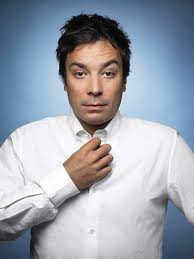
Jimmy Fallon 'Gets It'


PictureLove him or hate him, (come on,

does anyone really hate him?) you've got

to give Jimmy Fallon some props for being

a talented raconteur. Here's a video of Jimmy 


with Carly Rae Jepsen and the Roots playing


'classroom instruments' on Call Me Maybe.

This is MUSICIKING at its best!


Keep up the good work Mr. F - as a music educator I 


really appreciate what you're doing and we look forward to


lots more of this kind of fun in the future. Rock on!


Monday, April 23, 2012

What is a Music Educator?

Picture

Ever see  posters like the one here? They have headings like "Doctors"  or "Lawyers" followed by pictures of what people think they do.  I have been giving lots of thought to this idea from the music educator  perspective - what is a "music educator?" 


In my case,  I work at the Dallas School of Music and have been here for almost all of its 20 year existence.  It's a private music school.  We don't sell instruments or sheet music, we don't have 'group classes', and we don't have scholarships for 'gifted' students. We don't have a "board of directors", fund-raising performances, or after school programs at local junior highs.  We simply sell private music education to anyone who is interested in learning; all ages, and all levels of ability.  We also sell music education via the web with an online curriculum that reaches learners around the globe (so in a large way, the picture above applies to us far more than picture #1 below).  


I spend my days monitoring music-ed news, writing blogs, updating our social networks,  developing curriculum with great colleagues and creating incredible relationships with students... as I teach music.   I know that what I do on a daily basis is far different than what most music educators do, and that's just fine by me. 


The idea of selling music education is difficult to imagine for many. DSM's history is full of examples of people 'not getting it', from both within our profession and from the outside as well. There are even people in our own families who, like folks in those posters, often struggle with our work and vision. The examples are numerous and range from the funny to frustrating, yet we persevere. 


I interact with many passionate music teachers and advocates on twitter (#musiced) and I enjoy it immensely. I participate in #musiced chats, exchange ideas with some very important and influential educators/administrators from all over the world. I've even coordinated blog posts with contributors from near and far. I'm not sure many of these folks know exactly what I do, but that's ok - hopefully they will soon!  


 I'd love to hear your thoughts on this. Are you a music educator? What is a music educator? What is the perception of our profession?  I look forward to posting your responses and in the mean time - I thought I'd start the ball rolling with the following pictures: 


Picture
WHAT SOCIETY THINKS I DO

Picture
WHAT I ACTUALLY DO

Monday, March 19, 2012

A Brief Lesson in Rock and Roll by the Boss


I was fortunate enough to catch Bruce Springsteen's keynote speech at SXSW live online thanks to a tip from my 'peeps' on Twitter. I've been a fan of Bruce for a long time.  I am originally from Jersey and even played in a tribute band called Thunder Road when I was in college...lots of years ago.  I've seen BRUUUCCE live many times beginning in 1978 at a small arena in Springfield, MA, then again in 1981 with a nearly front row seat in Hartford. I even had the chance to see him at the Meadowlands in Jersey - the local hero throwing a massive party in his own rock and roll backyard with 60,000 of his closest buddies. 

Lately though as I have gotten older, I must admit I've grown tired of the political rhetoric attached to the music and tended to lean more toward the 'shut up and sing' camp when it came to the Boss. Don't get me wrong, some of the sounds I heard were great, I just hadn't waited in line to purchase a ticket or a CD, and frankly, hadn't really even sought out his new tunes like I once did. I have however, always been impressed with his speaking ability and very much enjoyed his induction of U2 at the Rock and Roll Hall of Fame. So today when I knew he would be addressing the crowd in Austin just down Interstate 35, I tuned in. 

As a long time teacher and outsider in my own profession (music education), I found myself emotionally drawn again to his call for us to find our soul and pour it into our work. I had grown so tired of the message that I could not hear the music. Now, his message was delivered so very clearly and simply that I found myself almost standing and applauding at my desk. He is every-man indeed, and spoke with a mix of conviction and honesty all wrapped in a naive and grand notion that music can still change the world.

He started off just as one might expect,

“Good morning. Good morning. Good morning. Why are we up so —ing early? How important can this speech be if we’re giving it at noon? Every decent musician in town is asleep. Or they will be before I’m done with this thing, I guarantee you.”

 I was hooked, and for the next half-hour or so I was schooled in rock and roll history, in what it means (or should mean) to be a musician, and what it's like to be passionate about your craft. Here are a few memorable quotes from his terrific speech:

On being the 'keynote' speaker and trying to sum up what's happening 'on the street': "No one hardly agrees on anything in pop anymore."

Upon hearing Elvis for the first time on Ed Sullivan 1958 "Once Elvis's music was heard AND seen, there was no putting the genie back in the bottle." 
 
On musical creativity: "Purity of human expression and experience is not confined to guitars, to tubes, to turntables, to microchips. There is no right way of doing it, there'sjust doing it."

To up and coming artists on how he learned from history "Listen up youngsters, this is how successful theft is accomplished." 

On what's important as a performer "At the end of the day, it's the power and purpose of your music that matters."

Watch the full speech here. If you have any rock and roll soul at all, you won't regret it 

 
Music